


If you saw our ad, you saw the opening. This page is the close look: where the channel runs, what carries you around it, the checks to run on day one, and what 60 days at home costs.
Here's exactly what arrives, in words: a channel that runs out through the back edge to a rounded cut-out, raised zones either side and a lower front. If yours doesn't match that, the return is on our label.
One thing first: if your chair already suits you, you don't need this. It's for the chair you're keeping, or can't replace: a hard office chair, the kitchen table on remote days, a work chair that isn't yours to change.
When a cushion is the wrong buy
A cushion changes what's under you, nothing more: it's for comfort on a hard seat, not for pain. If sitting is painful, that's a question for a doctor or physical therapist, not for a cushion. Don't wait if it's severe, getting worse, started after a fall or injury, or comes with numbness, tingling or weakness.
The flat-seat problem, in one paragraph
A few hours into the workday, a flat seat has met you everywhere, including under your tailbone area. A towel or a thicker pad makes the first hour softer, but the padding still sits directly under the same spot. It doesn't change where you make contact.
Space under: the channel
Turn the cushion around and look at the back edge. The gap is the point: the channel doesn't stop in the middle like the hole in a ring. It runs out through the rear edge.
From there it runs in to a rounded cut-out near the middle, like a keyhole. Sit all the way back and the tailbone area is over that opening instead of foam.

Why not a ring? A ring is closed all the way around, so when you sit all the way back there's foam at the back, right where the tailbone area sits. This channel stays open through the back edge.
Support around: the raised zones
An opening only works if there's something to sit on around it. That's the job of the rest of the shape: raised zones either side of the channel, a broad sculpted middle and a lower front under your thighs. Space under, support around.
And the honest catch: the opening only does its job while the raised zones around it hold up. If they pack down, you're back on the chair's own seat.
That's why density matters, and we don't publish that figure yet. So judge it the way you'll use it: full workdays inside the 60 days show you whether the raised zones bottom out early on you. If it isn't right, the return label is prepaid.
Which way around, and on which chair
- 1The open channel goes at the back, against the backrest, centered left to right.
- 2Sit all the way back, so the tailbone area lines up with the opening.
- 3The lower front sits under your thighs.
- 4Use it on a broad, stable, flat seat, not a narrow or deeply bucketed one. It's a seat cushion, not a backrest.
- 5Skip it if you prefer something under the tailbone area, or if the front feels tight under your thighs.

What only your own chair can tell you
Unsure about your chair? Email info@ergola.co with the model and we'll check the fit before you order.
How warm it sits is something only your own room can show: a warm afternoon or two in the 60 days will tell you. So use it properly: full workdays, not twenty minutes.

Four things to check on day one
- 1Check the shape when you unpack. The channel runs out through the back edge to a rounded cut-out, with raised zones either side and a lower front. If yours doesn't match that description, that's a return on our label.
- 2Press a raised zone and let go: memory foam that comes back to shape after you stand up. That tells you how it feels, not how it holds up.
- 3Check the height at your desk. Any cushion raises you a little, so your feet should still rest flat and your legs should still fit under the desk. If not, lower the chair.
- 4Sit, lean back, stand up and sit again. On smooth leather or flexible mesh a cushion can shift, so check it's still where you put it.

Then give it the days that count: the office chair through a long afternoon, the kitchen table on a remote day. That's what the 60 days are for.

What it costs to find out
One cushion is $49.99. Two are $89.98 ($44.99 each) and three are $119.98 ($39.99 each). Every US order ships free. Sit in two places, say a desk and a kitchen chair? The second cushion is the cheaper way to cover both.
So what does finding out cost? If it isn't right, we send a prepaid return label and refund you; every US order ships free, so there's no delivery charge to lose.
- 1You have 60 days from delivery to try it on your own chair. Using it is the point: send it back in its original condition, and normal-use wear is acceptable.
- 2Not right? Email info@ergola.co before you send it back, and we send a prepaid return label within 1 business day.
- 3Once the return arrives and is checked, the product price is refunded within 3–5 business days; your bank may take another 3–10 business days to show it.
US orders ship free and usually arrive 5–7 business days after dispatch. Every cushion has a 1-year warranty covering defects in materials and workmanship.
Pros and cons, from the seller
Why it's worth a look
- A channel open through the rear edge, not a closed ring
- Raised rear zones and a lower front around it
- Keeps the chair you already own
- 60 days from delivery to try it on your own chair
Worth knowing first
- No dimensions, firmness or density figures published yet
- Adds height, so check your desk clearance
- Can move on smooth leather or mesh: check it on day one
- Cut-out shapes don't suit everyone; it's a comfort product, not a medical device
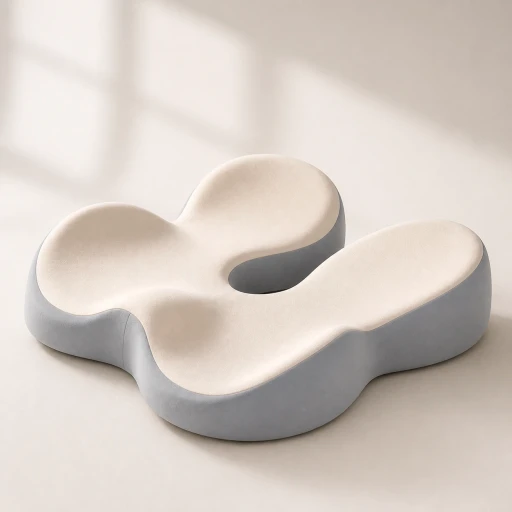
Ergola Memory Foam Seat Cushion
One sculpted memory-foam cushion with a channel open through the rear edge, for the chair you already own.
- 60-day home trial, prepaid return label
- 1-year warranty
- Ships in 1–2 business days
- Card, Apple Pay or Google Pay
Returns: 60 days from delivery, prepaid label; the product price is refunded, the original delivery charge isn't.
Next: the Memory Foam Seat Cushion page, where you pick your cushion and pay on the secure checkout. Nothing is charged before that.
Before you order
Is this the cushion from the ad?
Yes. It's the cream-top, gray-sided cushion on our seat-cushion page (go.ergola.co/seat-cushion), at the same prices as the order page. What arrives has the shape described here: a channel open through the back edge to a rounded cut-out, raised zones either side and a lower front.
Will it fit my chair?
It's made for broad, stable chair seats. Email info@ergola.co with your chair model and we'll check the fit before you order.
Does memory foam get warm, or firm up in the cold?
Foam feel can vary with temperature and use, so the 60-day home trial is the honest way to find out, on your chair and in your room.
Will the channel still be there in a few months?
We don't publish foam density yet, so we won't promise a lifespan. Full workdays in the 60 days show you whether it bottoms out early; if it isn't right, the return label is prepaid. Those days can't show month nine, and the 1-year warranty covers defects in materials and workmanship, not ordinary wear.
Is it a medical product?
No. It's a comfort product, not a medical device: it changes where you make contact with the seat. Ongoing or worsening pain is a question for a doctor or physical therapist, not for a cushion.
Can I use it in the car?
No. It isn't designed for car seats, which are usually narrow or bucketed.
